If you've ever wondered what is full-grain leather and why it often shows up in product descriptions (especially for wallets), this guide will answer it plainly. We'll cover how full-grain differs from other materials, how to spot the real thing, and how to care for a leather wallet so it serves you for years.
What Is Full-Grain Leather? A Simple Explainer
Full-grain leather is the outermost layer of the hide — the side that faced the animal's hair. When people ask "what is full-grain leather," they usually mean leather that's left in its most natural state: the surface hasn't been sanded, buffed, or coated to hide imperfections. Those natural marks — scars, grain patterns, and pore lines — are part of its character.
Why does that matter? Because full-grain keeps the strongest fibers of the hide intact. That strength translates into durability, resistance to wear, and the ability to develop a rich patina over time. A full-grain wallet begins to tell your story the moment you use it.
If you're picturing leather grades
When shoppers talk about "leather grades" they’re usually referring to how the hide has been processed. From most to least natural you’ll commonly see:
- Full-grain (most natural, strongest)
- Top-grain (sanded and refinished for a uniform look)
- Split leather / suede (separated underlayers)
- Corrected-grain or bonded (heavily treated or rebuilt)
That quick list is part of a broader look at leather types explained below.
What Is Full-Grain Leather — How to Tell It and Why It Matters
Knowing what is full-grain leather helps you make smarter buying choices. Full-grain leather keeps the hide’s original surface, so look for these signs when assessing an item:
- Visible natural markings or grain variations
- A firm, dense feel (not plasticky or thin)
- A finish that develops a patina instead of cracking or peeling
Here’s a short table to compare full-grain with its closest counterpart, which often causes the most confusion:
| Feature | Full-Grain Leather | Top-Grain Leather |
|---|---|---|
| Surface | Natural, unaltered | Sanded and refinished |
| Durability | Very high | High, slightly less than full-grain |
| Appearance over time | Gains patina | More uniform look, less patina |
| Typical use | Premium wallets, rugged bags | Dressier bags, furniture |
This is also where the phrase "full grain vs top grain" comes up in conversations. Top-grain is still good leather, but it’s been altered to create a consistent surface — that comes at the cost of some natural strength and the ability to age as distinctively.
Leather types explained, briefly
If you want the short version of leather types explained:
- Full-grain: intact outer layer, ages beautifully, most durable.
- Top-grain: sanded for appearance, more uniform, less patina.
- Split leather: inner layer that’s softer but weaker; often used for suede.
- PU/vegan leather: man-made, consistent, less durable but lower cost.
Understanding these basics will help when you’re picking a wallet or any leather accessory.
How Full-Grain Leather Performs in a Wallet
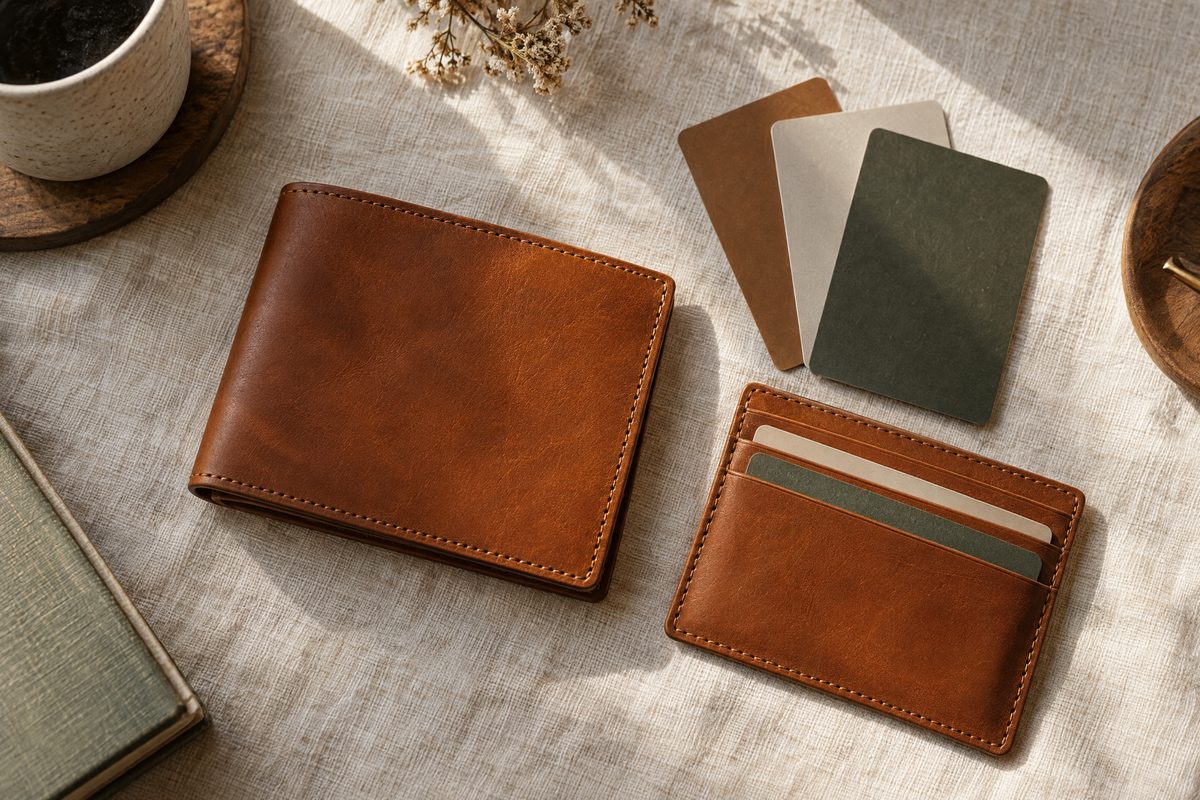
A wallet takes daily use: pockets, coins, cash, cards, rubbing against keys and zippers. That’s why material choice matters. When people ask what is full-grain leather in relation to wallets, the answer is simple: it’s a top choice for durability and character.
Benefits of a full-grain wallet:
- Lasts longer under daily wear
- Softens and develops a unique patina with handling
- Resists stretching and tearing better than lower grades
- Often needs less frequent replacement, which is practical and economical
If you’re shopping for a reliable everyday wallet, our selection of wallets focuses on practical shapes and honest materials so you can choose by use and feel, not just by label.
Full-Grain Leather: Buying Checklist
When you're ready to buy, having a short practical checklist makes it easier to judge quality quickly. This checklist is useful whether you ask "what is full-grain leather" in a store or read product descriptions online:
- Confirm the claim: look for the words "full-grain" in the product description and verify with photos showing natural grain and marks.
- Feel the thickness: true full-grain feels dense and substantial, usually 1.0–1.8 mm for wallet panels; lighter feels may indicate split layers or thin top-grain.
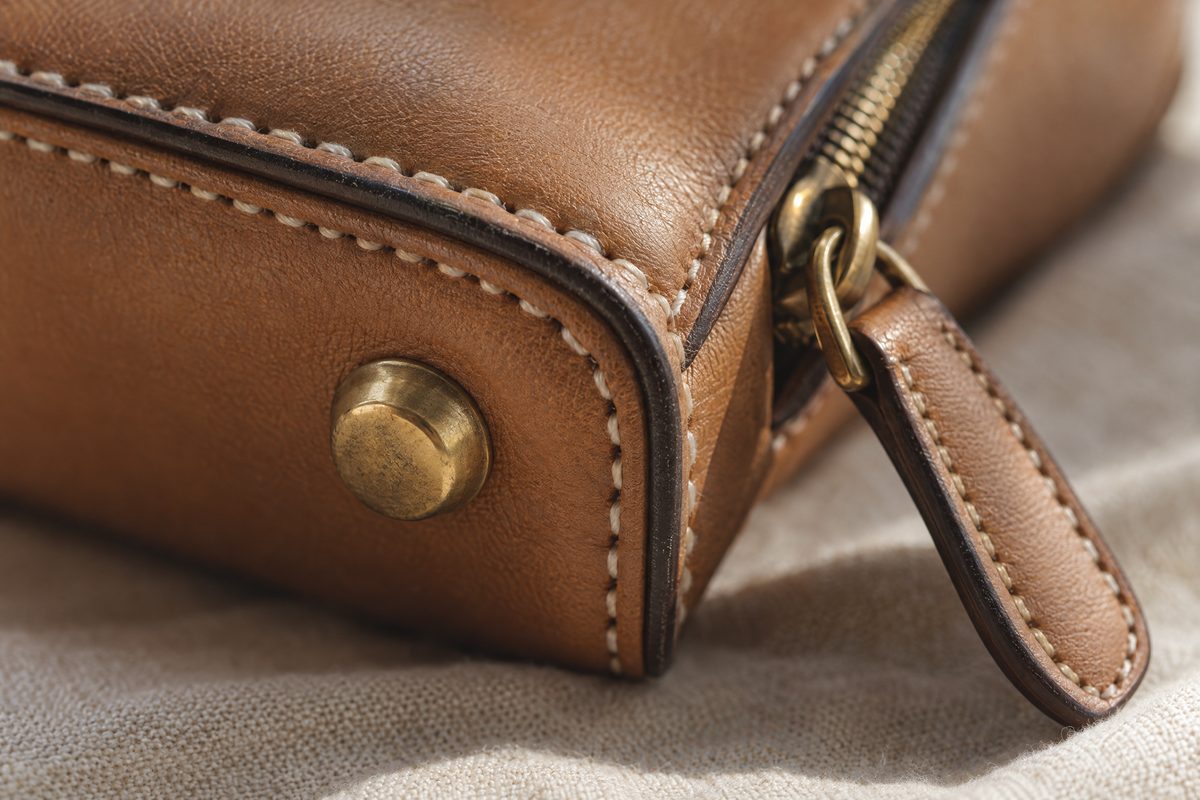
- Inspect edges and stitching: edges should be finished cleanly and stitching tight and even — loose threads or fraying suggest lower-quality construction.
- Check for finish type: minimal coating and visible pores are signs of authentic full-grain; plastic-y shine can indicate heavy coatings.
- Ask about tannage: vegetable-tanned full-grain will patina more noticeably than chrome-tanned; both can be full-grain but age differently.
Use this list at the shop counter or when comparing items online to cut through marketing terms and choose a wallet that will wear well.
Sizing and Material Guidance for Wallets
Selecting the right size and configuration matters as much as choosing what is full-grain leather. Consider how you carry essentials and match the leather thickness to the wallet type:
- Minimal card holder: look for thinner full-grain panels (around 1.0–1.2 mm) that remain slim but still strong.
- Bifold wallet: medium-weight full-grain (1.2–1.6 mm) balances structure and foldability without getting too bulky.
- Travel or long wallets: heavier grain (1.4–1.8 mm) provides support for extra compartments and keeps coins and receipts from deforming the shape.
Additional tips:
- Remember that full-grain will soften with use; a slightly stiff wallet will often become more comfortable over weeks.
- If you prefer a dressier look with less patina, choose a top-grain or a lightly finished full-grain — but be aware of trade-offs in aging.
- Consider lining choices: natural leather lining breathes better and ages with the outer leather; synthetic linings can improve water resistance but may trap moisture.
Common Mistakes to Avoid with Full-Grain Leather
Even with the right material, mistakes in use and care shorten a wallet’s life. Keep these common pitfalls in mind:
- Overstuffing: filling pockets beyond design stretches seams, compresses leather, and speeds wear.
- Using harsh cleaners: household cleaners and solvents strip oils and damage the grain — stick to leather-specific products.
- Ignoring humidity: prolonged damp storage can promote mildew; conversely, extreme dryness can make leather brittle. Aim for moderate conditions.
- Mistaking glossy finish for quality: high shine can hide low-quality hides or heavy coatings that won't patina well.
- Waiting too long between conditioning: periodic conditioning preserves oils and prevents cracking, especially in drier climates.
Avoiding these errors preserves both appearance and structural integrity so your full-grain wallet lasts for years.
Caring for Full-Grain Leather: Practical Tips
Full-grain leather is sturdy, but it’s not maintenance-free. A little attention helps a wallet look good for decades. Here’s a practical care routine:
- Wipe clean with a dry or slightly damp soft cloth regularly.
- Condition once or twice a year with a leather conditioner made for natural leather.
- Keep the wallet dry when possible; blot moisture and let it air-dry naturally.
- Avoid direct heat or sunshine for long periods; that can dry and fade leather.
- Rotate contents — don’t overstuff; leather holds its shape better when used sensibly.
Quick do’s and don’ts:
- Do test a conditioner on a hidden seam first.
- Don’t use household cleaners or solvents.
- Do store in a cool, dry place when not in use.
- Don’t seal away in plastic for long stretches; leather needs to breathe.
Repair and longevity
Small scuffs on full-grain leather often blend into the patina with time. For more significant wear, a local cobbler can re-stitch edges or smooth seams. Keeping receipts and a record of care helps if you ever want professional restoration.
When to Choose Other Leathers
Full-grain is great, but it isn’t the only sensible choice. Here’s when other options may suit you better:
- You want a uniform, salon-finish look: top-grain or corrected-grain may be appropriate.
- You’re on a tight budget and want something low-cost and consistent: PU leather or canvas options are available.
- You want a softer feel and a suede look: split leather or genuine suede works nicely.
Our shop carries a mix of materials so you can choose by use and budget. If you favor a rugged daily carry, full-grain works particularly well for compact wallets and card holders. For lightweight travel wallets, a treated canvas or top-grain option can be very practical — see our wider selection in shop all bags.
Where to Find Yours
If you’ve decided a full-grain wallet is right for you, we’re happy to help. Tin Bucket Mercantile carries thoughtfully made leather wallets and other leather and canvas goods. Visit our shop in downtown Dallas, Georgia at 222 Main Street, Dallas, GA 30132, or browse our online selection at shop all bags.
Want to ask a question or confirm materials before you buy? Please contact us or stop by and say hello — we’re a small-town mercantile with practical, honest gear and a preference for useful details. Learn more about how we started on our story and find our exact hours and directions on the store location page.
If you’d like more reading, our pieces on the craft of leather care and the differences between materials live in the journal. We aim to make leather choices straightforward: what is full-grain leather, how it compares, and how to care for the pieces you use every day.
Frequently Asked Questions
What is full-grain leather and why does it develop a patina?
Full-grain leather is the topmost layer of the hide preserved in its natural state, which keeps the strongest fibers intact. Because it isn’t heavily sanded or coated, oils from your hands and exposure to light and air interact with the hide’s surface, producing a natural darkening and soft sheen known as a patina. Patina is a sign of authentic aging and adds character; each piece develops differently based on use, climate, and care routines.
How often should I condition a full-grain leather wallet?
For most users, conditioning once or twice a year is sufficient. If you live in a very dry climate or carry the wallet daily in abrasive conditions, consider conditioning every three to six months. Use a conditioner formulated for natural leather and always test on a hidden area first. Conditioning replaces natural oils lost through use and exposure, helping prevent drying and cracking while preserving suppleness and enhancing the patina.
Can full-grain leather get wet, and what do I do if it does?
Full-grain leather can tolerate occasional moisture, but repeated exposure will degrade it over time. If your wallet gets wet, blot off excess water with a soft cloth and let it air-dry at room temperature away from direct heat. Once dry, apply a small amount of leather conditioner to restore oils that may have been lost. Avoid heat sources and don’t put the wallet in a dryer; rapid drying causes stiffness and can lead to cracking.