If you prefer to carry less, a minimalist wallet can simplify pockets, protect your cards, and keep your essentials within reach. This guide walks through what a minimalist wallet does best, the materials and styles that work, and how to pick one that suits your routine without fuss.
Minimalist Wallet: What It Should Do
A minimalist wallet should keep your essentials organized without adding bulk. Think ID, a couple of frequently used cards, some cash, and maybe one or two receipts. The goal isn't to hide every card you own but to make everyday access quick and reliable. Whether you call it a small wallet, a slim leather wallet, or an everyday carry wallet, clarity about what you actually need will guide the right choice.
Key functions of a minimalist wallet
- Hold 4–8 cards comfortably without overstretching.
- Secure at least a few bills folded flat or a small coin pouch if you need change.
- Fit cleanly into a front pocket, small bag, or a compact shoulder bag.
- Offer quick access to your ID and most-used card.
Best Minimalist Wallet Styles for Everyday Use
Minimalist wallets come in a few familiar shapes. Below are the styles we see most often and what they’re best for.
Card sleeve
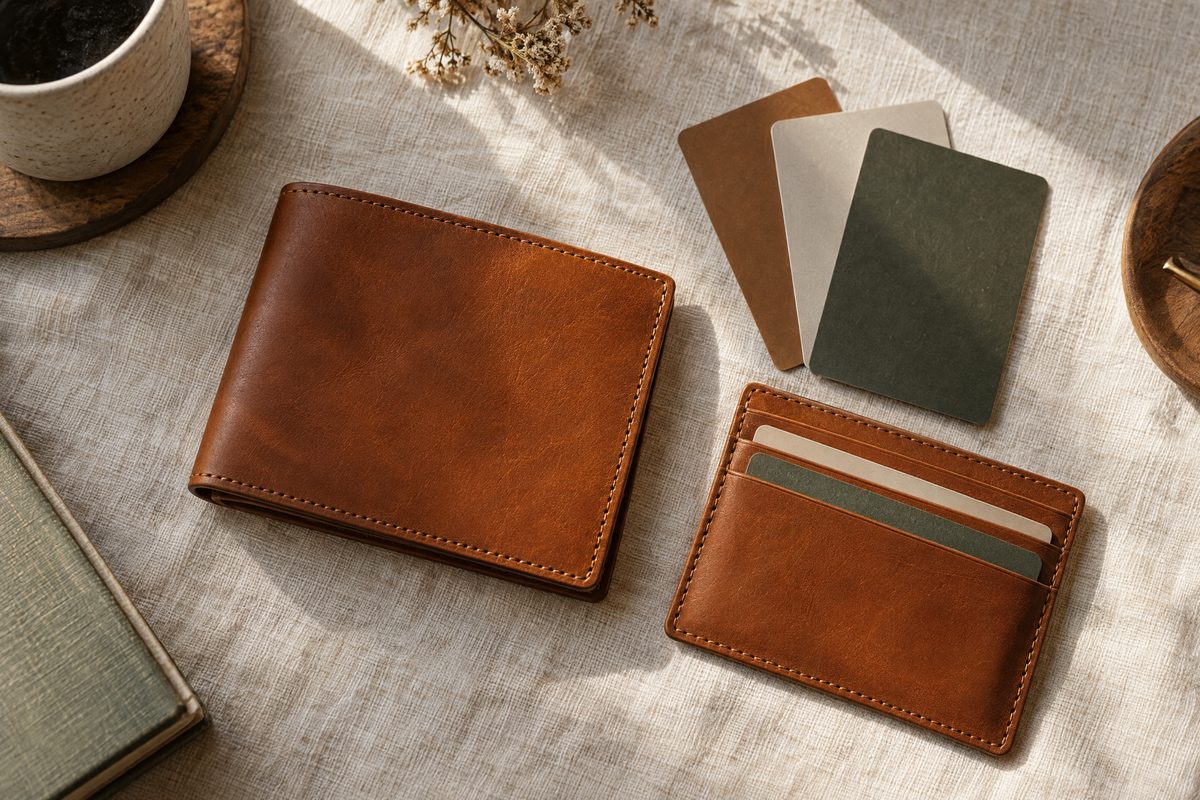
The card sleeve is the purest small wallet: slim, lightweight, and usually two to four card slots with a central pocket for cash. It’s ideal if you mostly pay with a single card and carry cash sparingly.
Slim bifold
A slim leather wallet keeps the classic bifold shape but trims the bulk. It often adds an ID window or a pull-tab for the top card. If you want a bit more storage without a full-sized wallet, this is a sensible compromise.
Zippered pouch
For those who like coins or ride transit, a small zippered wallet secures everything inside. It can be bulkier, but it’s trusted for keeping loose items from slipping out.
Elastic or strap wallets
Minimalists who carry only a few cards appreciate elastic or strap wallets that hold cards tightly and let you fan them out when needed.
How to Choose a Minimalist Wallet
Choosing the right minimalist wallet comes down to three things: what you carry, where you carry it, and how long you want it to last. Below are practical considerations to help you decide.
Capacity: match the wallet to your habits
- If you carry mostly cards and seldom cash, a card sleeve or elastic wallet will do.
- If you keep receipts or a work badge, pick a slim bifold with a pocket or an ID window.
- If you need coins, choose a zippered option or a small wallet with a coin compartment.
Material: what feels right and wears well
Materials affect look, feel, and lifetime. Leather ages gracefully; canvas is casual and washable; PU leather and suede offer different textures and price points.
- Genuine cowhide / split leather: durable, develops a patina, classic look.
- Suede: soft edge and muted look, but needs a bit more care.
- PU leather: budget-friendly, water-resistant, and consistent finish.
- Canvas: rugged, lightweight, and casual.
Practical features to check
- RFID blocking if you’re concerned about card skimming (optional).
- Secure stitching and reinforced slots that won’t stretch out quickly.
- Easy access for your most-used card—pull tabs, thumb slots, or raised top slots.
- What to look for in a minimalist wallet:
- Enough card slots for your regular cards, not every card you own.
- A slim profile that fits your pockets comfortably.
- Quality stitching and materials for everyday wear.
- A simple closure or none at all; less closure = less bulk.
Materials Compared: Quick Reference Table
| Material | Pros | Best for | Typical price range |
|---|---|---|---|
| Genuine leather | Ages beautifully, durable | Everyday carry wallet, classic look | $30–$120 |
| Canvas | Lightweight, casual, washable | Front-pocket wallets, casual wear | $15–$60 |
| PU leather | Affordable, water-resistant | Budget-friendly slim leather wallet | $6–$40 |
| Suede | Soft finish, muted look | Casual or dress-casual small wallet | $25–$90 |
Everyday Carry Wallet Tips and Care
A minimalist wallet should make life easier — and last longer. Follow these simple care tips to keep yours working well.
- Rotate cards so slots don’t stretch permanently.
- Keep moisture away from leather; wipe with a damp cloth and let dry.
- For canvas, spot-clean and avoid machine washing where possible.
- If a wallet starts to bulk up, review what you carry and remove one or two items.
How slim leather wallets differ
A slim leather wallet often uses fewer layers and tighter stitching to reduce thickness. Leather is forgiving: it stretches slightly to accommodate cards and then settles. If you’re choosing a slim leather wallet, expect it to soften over time and develop a personal look that matches daily use.
Common Minimalist Wallet Mistakes (and how to avoid them)
- Buying a wallet that holds every card “just in case.” Aim to carry only what you use regularly; it keeps the wallet slim and functional.
- Overfilling the wallet to the point it becomes a bulky folding wallet again. If you need more capacity often, consider a small everyday carry wallet with a modest expansion.
- Choosing style over function—what looks great but doesn’t let you access your ID or most-used card quickly will frustrate you.
Small Wallets That Work for Different Needs
Below are practical pairings of wallet style to use case.
- Commuter: small zippered wallet or card sleeve with a coin pocket.
- Front-pocket carry: card sleeve or elastic wallet with quick access slots.
- Travel light weekend: slim bifold with room for copies of ID and a few local cards.
- Purse or tote: small wallet with a secure zip or snap closure to stop items falling out.
Quick checklist before you buy
- Will it fit in your usual pocket or bag?
- Can you reach the main card fast?
- Does the material suit your daily life (weather, wear, and look)?
- Is the price in line with how often you’ll use it?
Minimalist Wallets and Sustainability
If sustainability matters to you, consider how long a wallet will last. Genuine leather, when well-made, often outlives synthetic options and reduces the need for frequent replacement. Canvas and durable PU leather can be excellent choices if you want lower maintenance or a specific appearance. Buying well-made means fewer replacements and less waste.
Where to Try and Buy: Practical Options
If you like the idea of feeling materials and testing pockets before you buy, try a local shop where staff can show you several styles at once. If you prefer online browsing, look for clear photos and honest descriptions about card capacity and dimensions.
We make it easy to explore styles and materials: check our wallets collection online, or browse shop all bags if you want a small wallet that pairs with a tote or shoulder bag. For new designs and seasonal additions, see our new arrivals.
Where to Find Yours
Tin Bucket Mercantile sells a range of compact, honest wallets designed for simple daily use. Visit us at 222 Main Street, Dallas, GA 30132 — more details are on our store location page — or explore our online selection at the wallets shop to find a minimalist wallet that fits your routine.
If you have questions about a particular style or need help matching a wallet to a bag, feel free to contact us or stop by the store. We’re a small-town mercantile that likes practical solutions: honest materials, clear choices, and wallets that do exactly what you need without any fuss.